
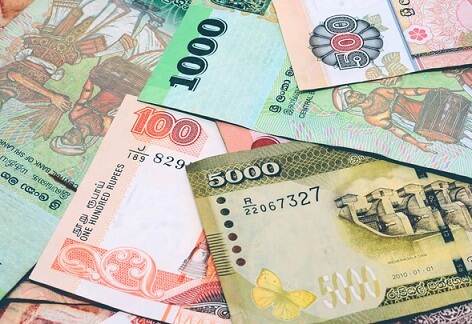

Money is not a commodity, instead money is a social relationship of debt and credit. Money is a creature of state, a credit issued by the state. A special kind of a credit which can be redeemed by taxation. By issuing money the state becomes a debtor. In other words, issued money (State IOU) becomes a liability to the state. The State (issuer of debt) has to accept it back in payments. Money always involve two entries: debt of the issuer and asset of the creditor. Delivering an IOU back to the issuer result in its extinction: debt is stricken and so as the asset of the creditor. Promise to convert is not a fundamental to issue of state IOU (ex: convertibility to gold). Modern fiat currencies are accepted with no promise to convert. In other words, modern currencies often called as fiat currencies are not backed by any precious metal.
However, not all the money is being circulated created by the central banks. In modern economy majority of the money supply is being created by the banking system. When banks lend or extend loans, they simply credit the borrowers account. Bank holds borrower’s IOU as its asset and issues the demand deposit as its liability. These bank credits (bank liabilities) function as money simply because they are convertible to government money and government accept these bank credits as in payment for the government taxes. Due to these reasons public would consider bank credits (Bank IOU) as good as cash (State IOU). Most countries use Bank IOU’s which are recorded electronically as their primary form of money as oppose to physical cash created by the State. An electronic payment system then ensure that payments can be settled using bank liabilities reducing the balance of one account and increasing the balance of another majority of the times, without the need of physical transfer of cash.
The Role Money Plays
Store of Value: Money gives us purchasing power. Money gives us the ability acquire goods and services in future so we can classify money as the most liquid private sector assert.
Unit of Account: Agreeing upon unit of measurement is critical to establish prices, to enable exchange and to make settlements. Money unit of account is absolutely necessary to keep a track of debts and credits.
Medium Of Exchange: Money enable us to trade with each other in an efficient manner.
Means of settlement: Means of settling debts. The money is fundamentally the social relation of credit and debt.
Money Forms
National currency exists in three different forms. Notes and Coins are in physical form and the other two are in electronic form.
Notes and Coins: IOU’s from central bank to consumers and commercial banks.
Bank Deposits: IOU’s from commercial banks to consumers. Reordered/Stored electronically
Central Bank Reserve: IOU’s from central bank to commercial banks. Reordered/Stored electronically
Money is categorized in two main categories by the central banks around the world
Money supply that is circulating in the economy is cash and commercial bank money since the central bank reserve do not circulate in the economy. The state money is referred to as base money which can only be created by the government.
Broad Money: The amount of money consumers has available for transactions (Cash and Bank deposits).
Base Money: Often referred as central bank money (Cash and Central Bank Reserves)
In conclusion, modern money is the unit of account chosen by its sovereign. It is used to denominate debt and prices. It is like kilograms or inches, a unit of measure. Money is a measuring unit which we keep our records hence the state can never run out of money.
By
Gayantha Dehiwatte, Entrepreneur and Socialist Advocate